I remember watching the wall between East and West Germany be torn down on TV. The collapse of the Berlin wall symbolized so much in terms of reuniting Germany and also in terms of the fall of communism. What I hadn't learned very much about was the history of how communism spread, and how it declined in so many countries.
I found the story of Russia to be very interesting. I remember growing up calling it the USSR, and after reading this chapter I feel that I know more about how it became to be such a large collection of different nations all under one flag, and also how it failed. A major red flag (no pun intended) in it's development is that communism was forced upon so many of the countries. To be honest, reading about how bad of an idea that ended up being has me a little more worried about the idea of pushing democracy on a country like Iraq and expecting it to stick. It was also amazing to me that the revolution in Russia happened so quickly. I imagine there were a number of components that all allowed it to be so rapid, but still it is pretty amazing considering the size and history of the country.
In terms of China, it seems like as a country it has changed so much from the original vision which the communist party had for it. They have gone from Mao combating capitalist tendencies within the Communist Party itself, to the kind of "free market socialism" that seems to be the driving force of China's now-booming economy. I do have to say, though, that China has really been able to make this hybrid system work far better than I or anyone who was talking about China 10 years ago seems to have predicted.
I was glad that they included a small analysis at the end of the chapter which examined the good and bad inherent in socialism. I think that especially in the U.S. it is used almost as a derogatory term, when in fact most of the developed nations have socialist policies in place in their countries. In fact, if you look at the top places to live in terms of quality of life (http://www.internationalliving.com/Internal-Components/Further-Resources/quality-of-life-2010) you will notice that many of the countries at the top of the list tend to favor more socialistic approaches to problems. So even as we examine the shortfalls of the communist regimes that have existed in history, lets not throw the baby out with the bathwater and ignore the benefits that can be reaped by integrating aspects of socialism into our own lives.
Tuesday, March 30, 2010

Sunday, March 21, 2010
WW Chapter 21: Doomed to repeat it?
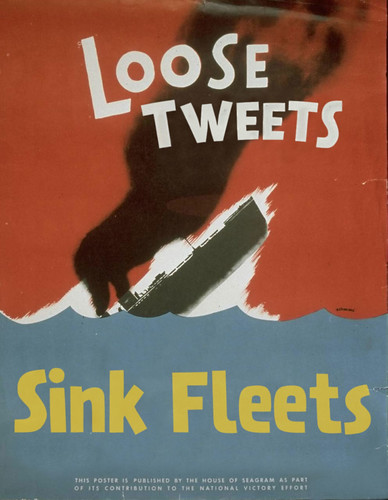
I enjoyed the examination that chapter 21 starts of with, which examines
the methodology used in defining the 20th century as a new period of
world history. It admits that the actual chronological length of it is
very brief compared to the periods which precede it. I agree that
eventually we might end up grouping it with the years that follow,
however it seems that so much has transpired that has largely impacted the
world in which we live that it is truly deserving of the title "A New
Period in World History". Chapter 21 begins to try and justify this title
with it's exploration into the collapse and recovery of Europe.
I feel like I know a pretty decent amount about the major conflicts that
defined Europe in the last century, but as I read this chapter I notice a
number of other events which I had never even heard of before. An example
is the Franco-Prussian War, which really helped set the stage for the two
world wars that followed in terms of defining relations between Germany
and France. I also found it interesting and ironic that the great
alliances of the early twentieth century which were created in order to
build lasting peace ended up obligating nations to become involved in
World War I.
Also interesting within this chapter is the mention of an element that
seems to have been resent and played a role in the wars of the later 20th
century: nationalism. Slavic and Austrian nationalism helped begin World
War I and German nationalism played a large role in World War II. I would
go further and suggest that American nationalism has palyed a large role
in our conflicts with both Iraq and Afghanistan.
Lastly I enjoyed reading about the Great Depression. Reading about it is
pretty much like reading about our recent Wall Street collapse. It is
frustrating because it really is the same conequences resulting from the
same policies. We gave the banks and investors free-regin without
oversight thinking the free market would regulate itself. It didn't and
the effects spread beyond simply those who made bad market decisions. The
president then tried to enact sweeping reform and invest in social
pograms in an attempt to boost the economy and his proposals are largely
criticsed by the right as being "socialist". Also much of the regulations
put into place after this disaster that were meant to prevent a repeate
of it (such as the Glass-Stegall Act) were gutted prior to this most
recent economic recession.
What was that quote about those who don't learn from history?
Friday, March 19, 2010
Hawaiian Queen Letter
The following are quotes and my comments from the Hawaii's Last Queen on American Annexation Letter:
"It had not entered into our hearts to believe that these friends and allies from the United States, even with all their foreign affinities, would ever go so far as to absolutely overthrow our form of government, seize our nation by the throat, and pass it over to an alien power"
I like how the queen uses this quote to, on the one hand express the positive relationship between the US and Hawaii through the use of the word "heart", while on the other hand using language to describes the US's proposed actions against Hawaii in such starkly negative terms. This contrasts these two poles of action, making it appear clear to the reader how wrong the latter role is.
---------
"Perhaps there is a kind of right, depending upon the precedents of all ages, and known as the "right of conquest", under which robbers and marauders may establish themselves in possession of whatsoever they are strong enough to ravish from their fellow followers."
I like how the queen here refers to the "right of conquest". SHe has a great way of phrasing many statements throughout her letter in the form of questions.. This makes them seem more open to differing opinion and thus less directly confrontational, while still driving home a strong point. Here she "asks" if there is such a right that gives those with power the abillity to take from others-suggesting that if there is then the US is acting within that right. What is pre-supposed, then, is that if this right does not exist the US is out of line.
--------
"And is the prospect satisfactory to a people who rely on self-government for their liberties?"..."Is such a departure from its established principles patriotic or politic?"
In these two quotes, the queen makes a very clear appeal to the US's own history of its fight for independence from England and the supposed values that it holds dear. This is a great strategy, because many of the principles in the US's constitution are not in line with it's proposed actions against Hawaii. Therefore, it is difficult for a reader to not see the apparent hypocrisy between these two.
--------
"As they deal with me and my people, kindly, generously, and justly, so may the Great Ruler of all nations deal with the grand and glorious nation of the United States of America"
I like the Queen's continual appeal to religion (Christianity) throughout the letter. SHe is essentially appealing to a power "higher" than that of the US in mediating this conflict. This not only resonates in the hearts of the deeply religious US at the timme, but also again highlights the desparity between what Americans say they believe in because of their religion, and their actions which the Queen suggests mmight not be living up to those values.
"It had not entered into our hearts to believe that these friends and allies from the United States, even with all their foreign affinities, would ever go so far as to absolutely overthrow our form of government, seize our nation by the throat, and pass it over to an alien power"
I like how the queen uses this quote to, on the one hand express the positive relationship between the US and Hawaii through the use of the word "heart", while on the other hand using language to describes the US's proposed actions against Hawaii in such starkly negative terms. This contrasts these two poles of action, making it appear clear to the reader how wrong the latter role is.
---------
"Perhaps there is a kind of right, depending upon the precedents of all ages, and known as the "right of conquest", under which robbers and marauders may establish themselves in possession of whatsoever they are strong enough to ravish from their fellow followers."
I like how the queen here refers to the "right of conquest". SHe has a great way of phrasing many statements throughout her letter in the form of questions.. This makes them seem more open to differing opinion and thus less directly confrontational, while still driving home a strong point. Here she "asks" if there is such a right that gives those with power the abillity to take from others-suggesting that if there is then the US is acting within that right. What is pre-supposed, then, is that if this right does not exist the US is out of line.
--------
"And is the prospect satisfactory to a people who rely on self-government for their liberties?"..."Is such a departure from its established principles patriotic or politic?"
In these two quotes, the queen makes a very clear appeal to the US's own history of its fight for independence from England and the supposed values that it holds dear. This is a great strategy, because many of the principles in the US's constitution are not in line with it's proposed actions against Hawaii. Therefore, it is difficult for a reader to not see the apparent hypocrisy between these two.
--------
"As they deal with me and my people, kindly, generously, and justly, so may the Great Ruler of all nations deal with the grand and glorious nation of the United States of America"
I like the Queen's continual appeal to religion (Christianity) throughout the letter. SHe is essentially appealing to a power "higher" than that of the US in mediating this conflict. This not only resonates in the hearts of the deeply religious US at the timme, but also again highlights the desparity between what Americans say they believe in because of their religion, and their actions which the Queen suggests mmight not be living up to those values.
Sunday, March 14, 2010
WW Chapter 20: Power, Wealth, and Inequallity
I liked the first personal story with which the author starts chapter 20. I have always felt that often a simple anecdote can speak volumes, and in this case I believe it did. The author showed, through this simple story about how the English who remained in Kenya refused to use English when speaking to the native people of Kenya exposed the large divide that still separated the people who had superficially declared their relationship to have changed.
I also liked the picture found on page 596 which portrays England as a giant octopus with it's hands in a number of different countries. A negative consequence of the industrial revolution was the power disparity it created between the heavily industrialized nations and those that were not. It allowed these more "advanced" nations to exert their milliard superiority over these other nations, exploiting their people and controlling their resources.
In order to maintain this massive inequality which was in their favor, Europeans often seemed to instigate political positions which seem to be intended to prevent any kind of "power grab" by these exploited people. This includes things like limiting the education which colonial subjects received and excluding them from most jobs which came with money and/or power.
In some ways, you can see systems like this in place even today. The groups in our society who tend to be more powerless or disenfranchised often receive the kinds of education and then jobs which do not afford them the ability to rise in the ranks. At the same time, people with money are afforded more avenues to increase their wealth and power and maintain their elevated social status. An example is the fact that in the USA capital gains are only taxed at 15% while income tax is much higher. Honestly, how many people who are below middle-class have stock portfolios which net any kind of real money that they would pay capital gains tax on? Instead this favorable tax status which capital gains has really only serves to make it easier for richer people to make even more money off of their money. So while it is easy to read chapter 20 and think of many of the actions of those in power against the oppressed as horrible things that used to happen, it is much more accurate to think of them as past permutations of the type of actions which continue even today.
I also liked the picture found on page 596 which portrays England as a giant octopus with it's hands in a number of different countries. A negative consequence of the industrial revolution was the power disparity it created between the heavily industrialized nations and those that were not. It allowed these more "advanced" nations to exert their milliard superiority over these other nations, exploiting their people and controlling their resources.
In order to maintain this massive inequality which was in their favor, Europeans often seemed to instigate political positions which seem to be intended to prevent any kind of "power grab" by these exploited people. This includes things like limiting the education which colonial subjects received and excluding them from most jobs which came with money and/or power.
In some ways, you can see systems like this in place even today. The groups in our society who tend to be more powerless or disenfranchised often receive the kinds of education and then jobs which do not afford them the ability to rise in the ranks. At the same time, people with money are afforded more avenues to increase their wealth and power and maintain their elevated social status. An example is the fact that in the USA capital gains are only taxed at 15% while income tax is much higher. Honestly, how many people who are below middle-class have stock portfolios which net any kind of real money that they would pay capital gains tax on? Instead this favorable tax status which capital gains has really only serves to make it easier for richer people to make even more money off of their money. So while it is easy to read chapter 20 and think of many of the actions of those in power against the oppressed as horrible things that used to happen, it is much more accurate to think of them as past permutations of the type of actions which continue even today.
Subscribe to:
Comments (Atom)
